AI Is a Tool, Not a Strategy
Because AI accelerates whatever foundation you already have — strong or weak.

We talk a lot about AI, partly because we use it every day, and partly because it genuinely changes how we build. It lets small teams move faster, validate ideas earlier, and operate with a level of efficiency that used to require layers of process and headcount. (Together, the two of us have shipped more software in the past 3 months than the engineering team of 25+ people we used to manage did in 1 year.)
But even with all of that, we never want to lose sight of something simple:
AI is not magic.
It doesn't replace the hard parts of running a company. AI can speed up execution, but it can't define roles, enforce accountability, or make tough prioritization decisions. Those are still management responsibilities.
And if you add AI to your business for the wrong reasons — to look modern, to satisfy a board deck, or to chase a trend — it usually reveals the cracks instead of covering them. So this week, we wanted to zoom out and look at AI in the context we all actually operate in: real businesses with customers, teams, processes, and all the unglamorous details that determine whether something succeeds or falls apart.
Don't take it from us. Take it from Henry Kravis.
One of the most interesting conversations in AI this week came from an interview with Henry Kravis, who started KKR with $120,000 in 1976 and spent the next four decades turning it into a firm with $700 billion+ assets under management by doing one thing exceptionally well: building and fixing real companies.
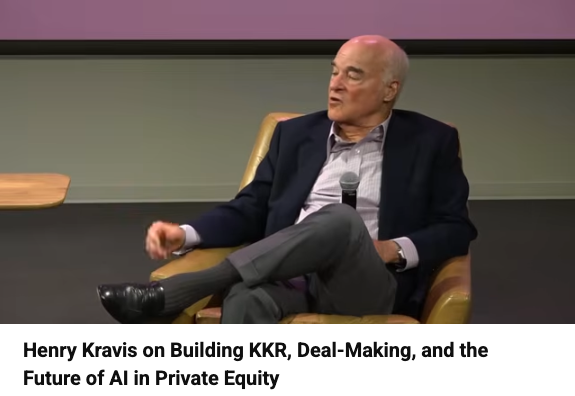
Kravis was asked about how AI fits into modern deal-making, and his answer was pretty simple:
"AI is not going to run the company. That's a productivity improvement — absolutely — but you still need a really good management team, cultural fit, and tight integration, or the rollup will blow up."
For all the excitement around AI, the part people underestimate is that your business fundamentals will still determine the outcome.
And those fundamentals look the same whether you're building a startup, running an operating team, or executing a rollup strategy:
- AI can improve a workflow, but it cannot decide which workflow matters.
- It can speed up decisions, but it cannot determine which decisions should exist.
- And it definitely can't integrate an acquisition or repair a terrible company culture.
Across the conversation, Kravis kept coming back to the basics: the operators who create value are the ones who stay curious, adapt their plans after they buy the business, and know how to integrate teams and processes. The tools may change, but the work doesn't.
Take this with you into 2026
So, here are the takeaways worth carrying into the new year as you sit down to write your strategy for 2026:
- Tool, not boss: AI boosts productivity and margins, but it doesn't run companies.
- Management first: Leadership matters, and strong CEOs and teams are non-negotiable; AI won't run your company.
- Integration matters: Deals and rollups fail without tight integration and cultural fit, regardless of AI.
- Multiples won't save you: The classic buy-low/sell-high multiple spread is shrinking. Returns and value must come from actual operational improvement.
- Dynamic playbooks: Treat AI as one component in a flexible plan, not a static model.

Are you here for the right reasons?
At the end of the day, AI is an incredible accelerant — but it accelerates whatever foundation you already have.
Strong management becomes stronger. Clear culture becomes clearer. Good processes become more efficient.
And the reverse is also true.
In sum, if it ain't broke… don't fix it.
Frequently Asked Questions
Continue Reading
Four AI Conversation Starters (To Avoid Holiday Small Talk)
Four timely AI conversation starters covering federal vs state AI regulation, Opus 4.5 capabilities, physical AI in construction, and Michael Burry's bet against Nvidia—perfect for surviving holiday small talk.
Our Thanksgiving Gratitude List (The Tech Edition)
Discover the AI tools transforming how we build products at Lowcode Garage. From publishing content with Claude Desktop to building prototypes in weeks instead of quarters, here's our Thanksgiving gratitude list for the tech that makes it all possible.

So, What's the Story?
Discover why human storytelling remains essential in the age of AI-generated content. Learn how micro-communities and authentic narratives drive engagement, and explore RacketAlpha—our tool for connecting with niche influencers in racket sports.